The recent fire at Medline’s distribution facility in Tracy, California, has drawn significant attention across the healthcare supply chain community. While the full impact on product availability and distribution remains unclear, the incident serves as a timely reminder of an important reality: healthcare organizations must be prepared for supply disruptions before they occur.
Whether caused by a fire, natural disaster, manufacturing issue, product recall, geopolitical event, or transportation disruption, supply interruptions remain a persistent risk for healthcare providers. The organizations that navigate these situations most effectively are those that have established contingency plans, visibility into alternative products, and processes that enable rapid decision-making when circumstances change.
Preparation Matters More Than Prediction
Supply chain leaders are often asked to respond quickly when a product becomes unavailable. Identifying suitable alternatives during a disruption can be time-consuming, particularly when clinical requirements must be evaluated alongside product availability.
The challenge is not simply finding another product. It is finding an alternative that meets clinical requirements, supports patient safety, and can be implemented with confidence.
For this reason, many healthcare organizations are investing in tools and processes that allow them to evaluate alternatives before a disruption occurs. The more preparation that happens before a crisis, the faster organizations can respond when one arises.
Building Resilience Through Functional Equivalents
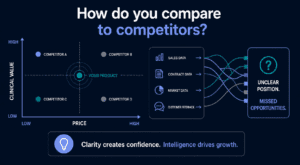
One strategy is to maintain visibility into functional equivalent products before a disruption occurs. By identifying clinically appropriate alternatives in advance, organizations can reduce the time required to respond when supply interruptions affect product availability.
Rather than scrambling to research substitute products during a crisis, supply chain and clinical teams can quickly evaluate pre-identified alternatives and make informed decisions.
This approach can help organizations:
- Respond more quickly to supply disruptions
- Reduce the operational burden on supply chain and clinical teams
- Support continuity of patient care
- Improve organizational resilience
- Maintain momentum during periods of uncertainty
Building Resilience Through Functional Equivalents
One strategy is to maintain visibility into functional equivalent products before a disruption occurs. By identifying clinically appropriate alternatives in advance, organizations can reduce the time required to respond when supply interruptions affect product availability.
Rather than scrambling to research substitute products during a crisis, supply chain and clinical teams can quickly evaluate pre-identified alternatives and make informed decisions.
This approach can help organizations:
- Respond more quickly to supply disruptions
- Reduce the operational burden on supply chain and clinical teams
- Support continuity of patient care
- Improve organizational resilience
- Maintain momentum during periods of uncertainty
Looking Beyond Today's Headlines
Events like the Tracy fire are reminders that resilience is not built during a crisis. It is built beforehand through preparation, planning, and access to reliable information that supports informed decision-making.
For healthcare organizations focused on strengthening supply continuity, the question is not whether another disruption will happen. It is whether they have the information, tools, and processes in place to respond quickly when it does.
And Staritas is focused on providing it. With our Functional Equivalents solution, healthcare organizations can tap into a safe, evidence-based supply alternatives service covering more than 450,000 medical devices and capital equipment to mitigate shortages, consolidate vendors and standardize products,.
Staritas’s functional equivalence algorithms are based on expertly weighted key performance indicators for more than 400 product categories, giving providers quick access to a comprehensive list of safe, vetted alternatives they can trust to keep care moving as product availability changes.
Disruptions are unpredictable. Preparation doesn’t have to be.
Click here to learn more about building readiness before the next disruption occurs.