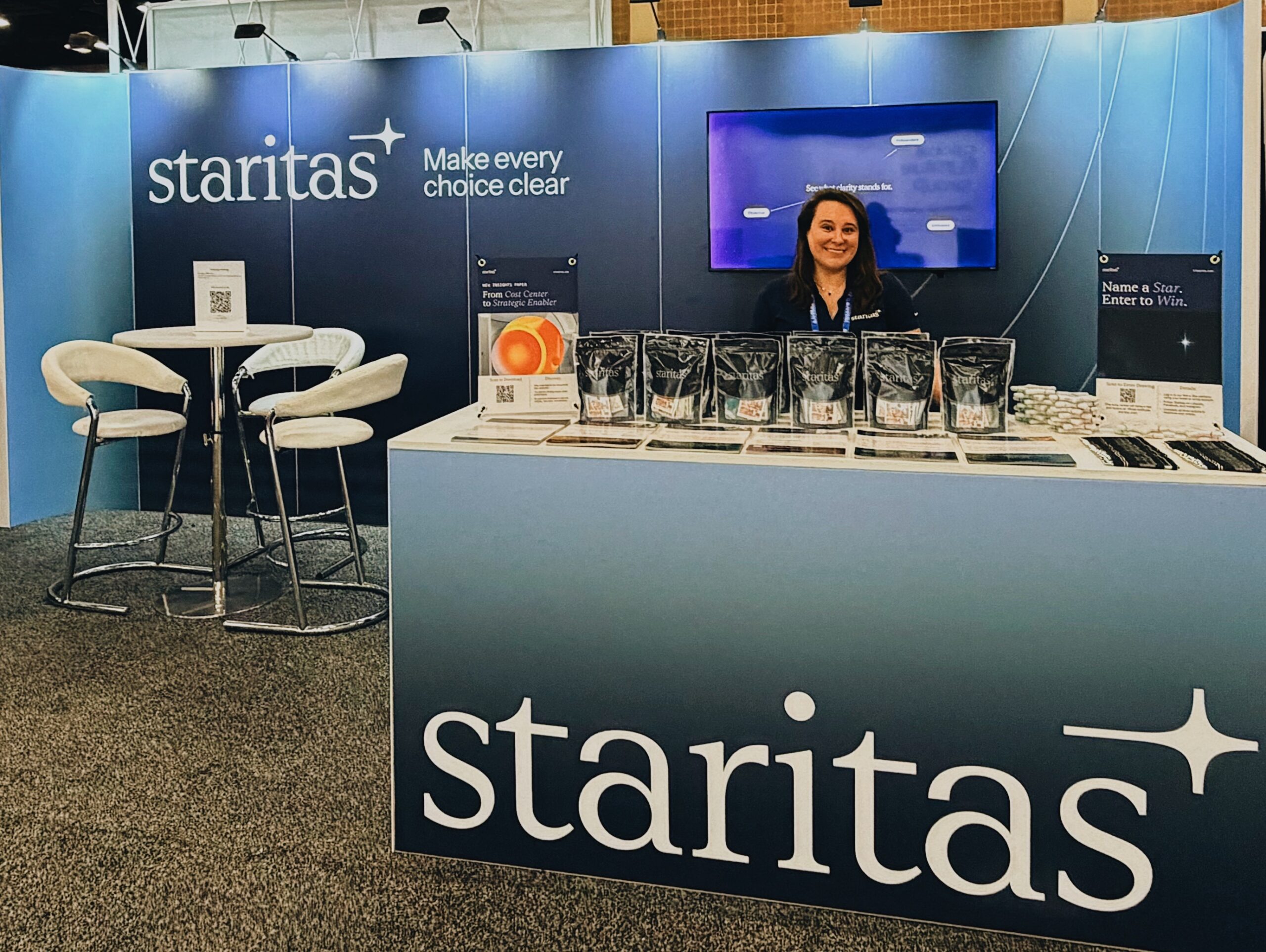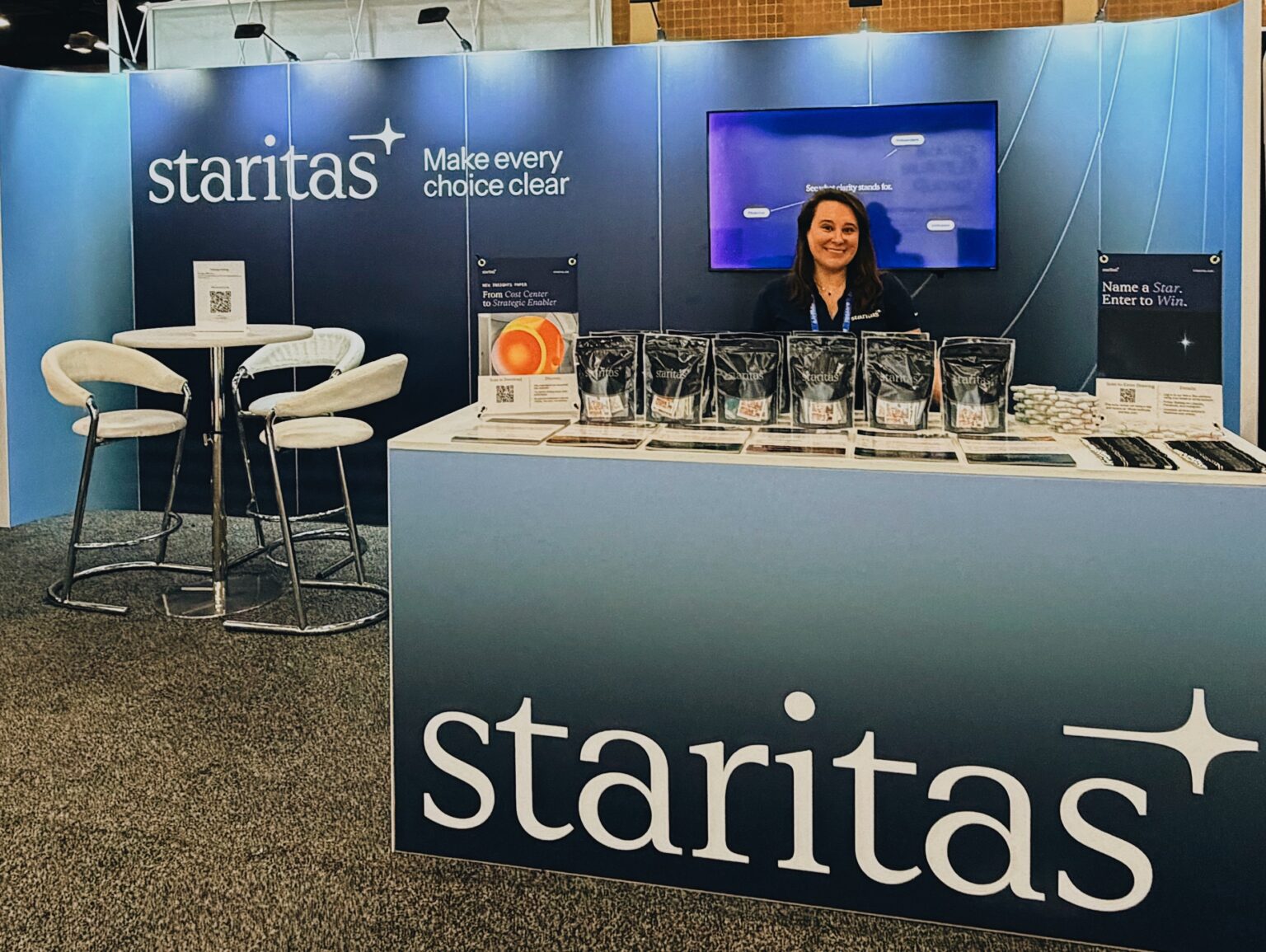
Every AHRMM Annual Conference offers a glimpse into where healthcare supply chain is headed. This year, one theme stood above the rest:
The future won’t be defined by technology alone—it will be defined by how organizations combine trusted data, human expertise, and cross-functional collaboration to make better decisions. After several days at AHRMM26 in San Antonio, I left with more than pages of notes and new connections; I left encouraged by the industry’s willingness to collaborate, challenge conventional thinking, and share practical solutions to increasingly complex problems.
Healthcare continues to face financial pressure, workforce shortages, supply disruptions, and growing expectations to improve both clinical and operational outcomes. Yet throughout the conference, there was a noticeable sense of optimism. Rather than simply reacting to today’s challenges, healthcare leaders are actively building more resilient organizations by strengthening the quality of their decisions through trusted data, stronger collaboration, and a long-term strategic perspective.
Supply Chain is a Strategic Driver
One message resonated throughout nearly every keynote, educational session, and hallway conversation: healthcare supply chain is no longer viewed solely as an operational function. It has become a strategic driver of organizational performance.
Today’s leaders are expected to do far more than ensure products are available when and where they’re needed. They’re helping organizations navigate financial pressures, improve clinical outcomes, strengthen resilience, optimize capital investments, and support enterprise-wide decision-making.
Whether discussions focused on value analysis, capital planning, artificial intelligence (AI), resiliency, or data analytics, the underlying objective remained remarkably consistent: make better decisions—faster, with greater confidence, and with the trusted intelligence needed to balance cost, quality, risk, and clinical impact.
That evolution reflects a broader transformation across healthcare. As organizations become increasingly complex, decision quality has become just as important as operational efficiency. The strongest organizations are breaking down silos, bringing together supply chain, clinical engineering, finance, value analysis, and executive leadership to make more informed decisions that benefit both patients and the organization as a whole.
The AI Conversation Is Becoming More Mature
AI was one of the most discussed topics throughout AHRMM26, but what stood out wasn’t simply the excitement surrounding AI. It was the evolution of the conversation.
Instead of asking whether AI can automate a task, healthcare leaders are asking more meaningful questions:
- Does it improve decision-making?
- Does it support clinicians instead of adding complexity?
- Can we trust the data behind the recommendations?
- Does it create measurable operational or financial value?
- How does it integrate into existing workflows?
Those are the questions that increasingly define succesful AI adoption.
The conversation has shifted from what AI can do to whether organizations can trust the information that powers it. Without trusted data, even the most sophisticated technology cannot consistently support confident decision-making. Organizations seeing the greatest success recognize that AI is most effective when it’s built upon strong governance, reliable data, clinical expertise, and operational discipline.
Innovation delivers its greatest value when it helps healthcare organizations make every choice with greater clarity, confidence, and consistency.
Turning Data Into Action
Another theme emerged throughout the conference: healthcare doesn’t need more information—it needs greater clarity.
Organizations are inundated with data, but data alone doesn’t improve outcomes. The real opportunity lies in transforming information into actionable intelligence that helps leaders make faster, more confident decisions across supply chain, clinical engineering, finance, and executive leadership.
Whether the discussion centered on standardization, capital planning, supplier resilience, or value analysis, the underlying challenge remained the same: enabling organizations to move from reacting to problems toward making proactive, informed decisions that improve both operational performance and patient care.
Collaboration Remains Healthcare's Greatest Strength
While the educational sessions delivered valuable insights, many of the most meaningful conversations happened outside the meeting rooms.
Whether reconnecting with longtime colleagues, meeting healthcare leaders for the first time, engaging with members of AHRMM’s Young Professionals Advisory Council (YPAC), or speaking with organizations exploring new approaches to supply chain challenges, one characteristic consistently stood out: healthcare remains an industry built on collaboration.
Professionals openly shared lessons learned, discussed implementation challenges, exchanged best practices, and celebrated successes—not because they have all the answers, but because they recognize that collective learning accelerates progress for everyone.
Those conversations reinforced an important truth: better decisions rarely happen in isolation. They emerge when organizations bring together diverse perspectives, trusted information, and a shared commitment to improving patient care and operational performance.
Looking Ahead
AHRMM26 reinforced that healthcare’s greatest opportunities won’t come from technology alone. They’ll come from empowering people with trusted data, stronger collaboration, and the confidence to make better decisions.
As the industry continues to navigate financial pressures, workforce challenges, and increasing complexity, organizations that invest in decision intelligence—not simply more technology—will be better positioned to adapt, innovate, and deliver lasting value.
The future of healthcare supply chain isn’t just about managing products or processes. It’s about enabling smarter decisions that improve outcomes across the entire enterprise. That’s the future many organizations are already building, and it’s one that will continue shaping healthcare for years to come.
Written by Alysha Melnyk, MPH, LSSGB, Manager, Healthcare Industry Relations, Staritas