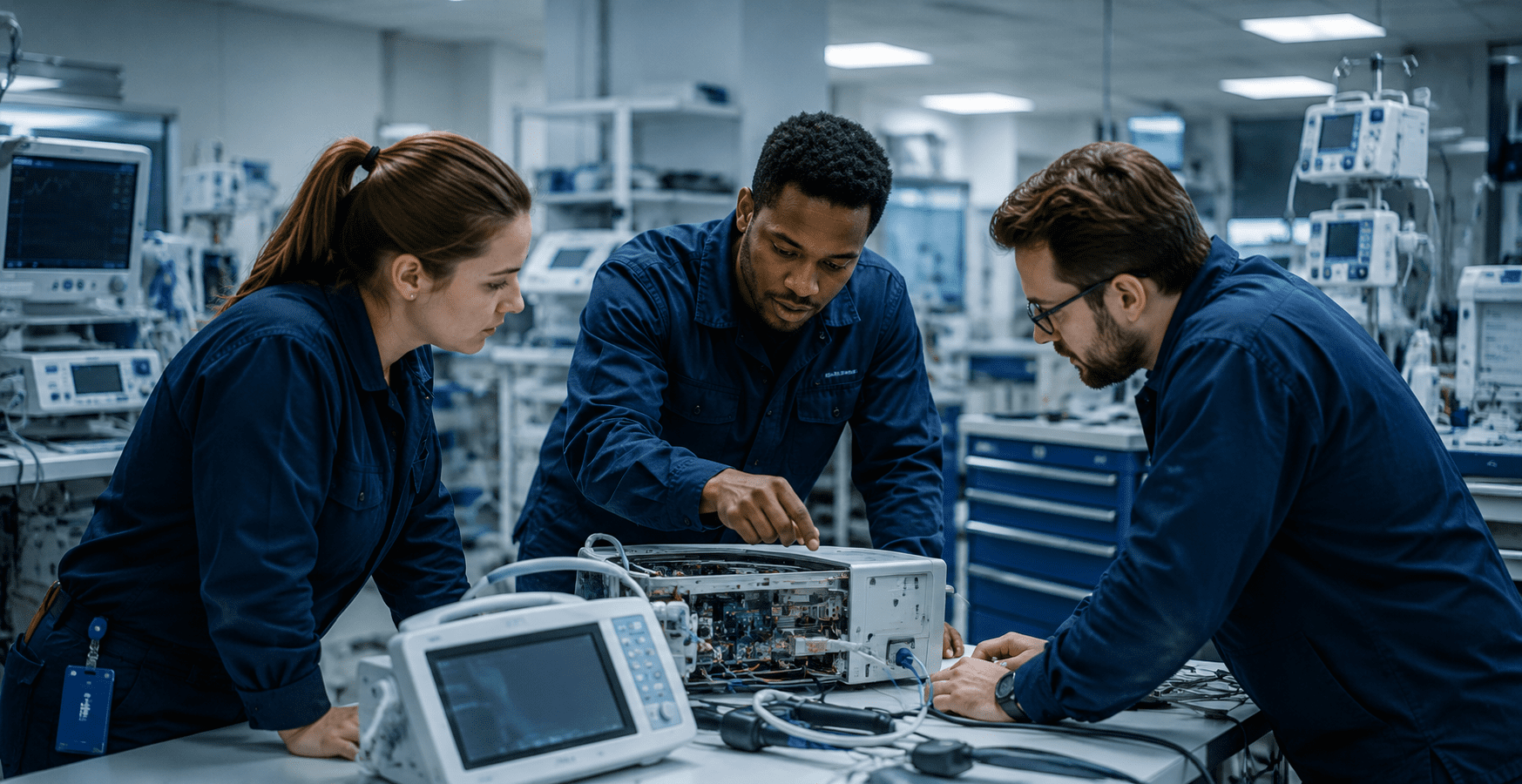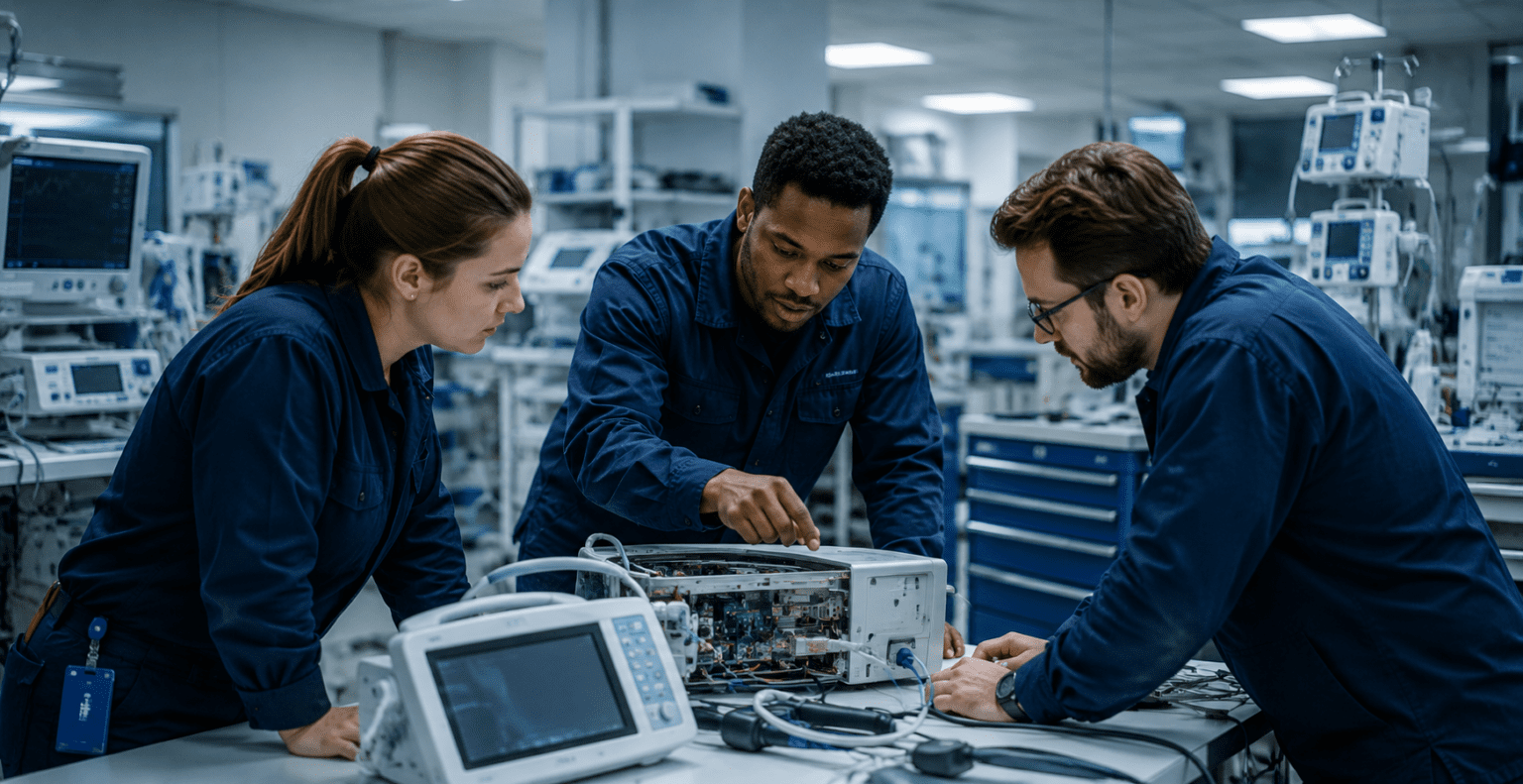
Most patients will never meet the Healthcare Technology Management (HTM) professionals responsible for ensuring the technology supporting their care is functioning safely and reliably. But every day, healthcare organizations depend on these teams to keep thousands of devices operational, compliant, connected, secure, and ready when clinicians need them most.
From infusion pumps and telemetry systems to imaging equipment and surgical technologies, modern healthcare runs on medical devices. And behind those devices are HTM, biomedical engineering, and clinical engineering professionals working continuously to manage risk, maintain uptime, support patient safety, and respond to operational challenges that are becoming more complex every year.
For many HTM teams, the work has changed dramatically over the past decade. What was once viewed primarily as equipment maintenance and repair has evolved into a far broader operational and strategic responsibility. Today’s HTM teams are balancing preventive maintenance schedules, urgent repair requests, recall response coordination, cybersecurity assessments, accreditation readiness, capital planning, fleet standardization, and service delivery optimization—often simultaneously and often with constrained resources.
At the same time, healthcare organizations are becoming increasingly dependent on connected technology to deliver care. That combination is placing HTM at the center of healthcare resilience.
HTM Teams Are Managing More Complexity Than Ever
Many healthcare organizations are operating with aging equipment fleets, growing device inventories, deferred capital replacement, and increasing pressure to reduce operational costs. Meanwhile, medical devices themselves are becoming more sophisticated, more interconnected, and more dependent on software, networks, and interoperability with other systems across the hospital environment.
HTM teams are expected to manage this complexity while maintaining equipment availability, supporting clinicians, preparing for accreditation surveys, and minimizing disruption to patient care.
In practice, that often means:
- Managing thousands of assets across multiple facilities
- Supporting Alternative Equipment Maintenance (AEM) programs
- Tracking PM completion rates and documentation requirements
- Coordinating service histories and vendor support
- Evaluating service contract costs and performance
- Responding to recalls and hazard alerts
- Supporting device cybersecurity initiatives
- Maintaining accurate CMMS and inventory data
- Helping prioritize capital replacement decisions
For many departments, the challenge is not simply maintaining equipment—it is managing constant prioritization. A pump failure, an urgent imaging issue, a cybersecurity alert, a Joint Commission survey preparation request, and a Class I recall can all happen in the same week. HTM teams are expected to respond quickly while continuing to support day-to-day operational demands that rarely slow down.
The Industry Is Still Fighting a Reactive Model
Despite the growing importance of HTM, many organizations still rely on fragmented processes and incomplete data to manage medical technology operations.
Asset inventories may be inconsistent. Device data may exist across disconnected systems. Service histories can be difficult to consolidate. Recall workflows are often manual. Capital planning decisions are sometimes based primarily on equipment age rather than utilization, risk, maintenance history, or clinical dependency.
As a result, many HTM departments spend significant time operating reactively.
Teams are frequently pulled into:
- Unplanned equipment failures
- Emergency replacement requests
- Manual recall investigations
- Last-minute accreditation preparation
- Cybersecurity remediation efforts
- Escalating service costs
- Resource shortages and staffing gaps
The reality for many biomedical equipment technicians (biomeds) and clinical engineering leaders is that reactive work consumes the time and resources needed for more strategic initiatives. That is why many healthcare organizations are now focusing on improving visibility across their medical equipment environments—not simply to improve operational efficiency, but to reduce risk and strengthen resilience.
Cybersecurity Has Changed the Scope of HTM
Recall and hazard alert activity continues to place significant pressure on healthcare organizations. What can appear straightforward on paper often becomes operationally complex in practice. Identifying affected inventory, locating devices across facilities, validating serial numbers, coordinating with clinical teams, documenting corrective actions, and ensuring timely communication can require extensive manual effort—especially when inventory records are incomplete or fragmented. HTM departments are often the teams coordinating much of this work behind the scenes. At the same time, organizations are facing increasing expectations around response speed, documentation accuracy, and risk mitigation.
As recalls become more frequent and healthcare environments grow more complex, many organizations are recognizing the importance of:
- More accurate inventory data
- Better asset visibility
- Faster identification of affected devices
- More centralized workflows
- Stronger coordination between HTM, supply chain, and clinical teams
The goal is not simply responding to recalls faster. It is reducing operational disruption while improving patient safety and organizational readiness.
Recall Management Has Become Increasingly Operationally Intensive
One of the biggest shifts in HTM has been the growing responsibility surrounding medical device cybersecurity. Unlike traditional IT assets, medical devices operate within highly sensitive clinical environments where downtime, patching delays, software changes, or connectivity disruptions can directly affect patient care and clinician workflows. Many devices also operate on legacy operating systems or require specialized vendor coordination that complicates standard cybersecurity practices.
As healthcare cyber threats continue to rise, HTM teams are increasingly partnering with IT and information security departments to:
- Identify vulnerable devices
- Assess clinical and operational risk
- Prioritize remediation strategies
- Support network segmentation efforts
- Coordinate vendor communication
- Balance cybersecurity needs with clinical continuity
For many organizations, cybersecurity is no longer viewed solely as an IT issue. It has become a shared operational responsibility where HTM plays a critical role.
Staffing Pressures Are Creating Additional Strain
Workforce challenges are another major pressure point across the HTM profession. Many experienced biomeds and clinical engineers are approaching retirement, while healthcare organizations continue to face recruiting and retention challenges. At the same time, newer technologies often require increasingly specialized competencies related to networking, software integration, cybersecurity, and advanced diagnostics. Many teams are being asked to support more devices, more facilities, and more operational responsibilities without proportional increases in staffing or resources.
This reality is contributing to:
- Burnout
- Increased vendor dependence
- Delayed strategic initiatives
- Growing training demands
- Resource prioritization challenges
For HTM leaders, balancing operational workload with long-term planning has become increasingly difficult.
Capital Planning Requires Better Visibility
Healthcare organizations are also under significant financial pressure to make smarter capital investment decisions. Historically, replacement planning was often driven heavily by equipment age or urgent operational failures.
Today, many organizations are trying to adopt more risk-informed and data-driven approaches that consider:
- Utilization
- Failure history
- Maintenance costs
- Clinical criticality
- Cybersecurity exposure
- Standardization opportunities
- Service support challenges
- Operational dependency
Accurate inventory data and stronger lifecycle visibility are becoming essential to these decisions. HTM teams increasingly play a central role in helping organizations understand where technology risk exists, which assets require prioritization, and how long-term replacement strategies can support both operational and financial sustainability.
HTM Is No Longer Operating Behind the Scenes
For years, HTM departments were often viewed primarily as technical support functions. That perception is changing. Healthcare organizations are increasingly recognizing that effective HTM operations influence:
- Patient safety
- Clinical continuity
- Cybersecurity readiness
- Regulatory compliance
- Operational resilience
- Financial stewardship
- Technology standardization
- Long-term sustainability
The role of HTM is becoming more visible because healthcare itself has become more dependent on technology than ever before. And while patients may never see the work happening behind the scenes, healthcare organizations rely on it every hour of every day.
As HTM Week recognizes the professionals supporting healthcare technology management, it also highlights an important reality: HTM is no longer simply maintaining equipment. It is helping healthcare organizations navigate complexity, reduce risk, strengthen resilience, and support safer patient care across the enterprise.
Learn how Staritas helps healthcare organizations strengthen HTM operations through independent insights, lifecycle planning support, recall management solutions, cybersecurity analysis, and data-driven decision support designed to help teams make more informed, defensible technology decisions.