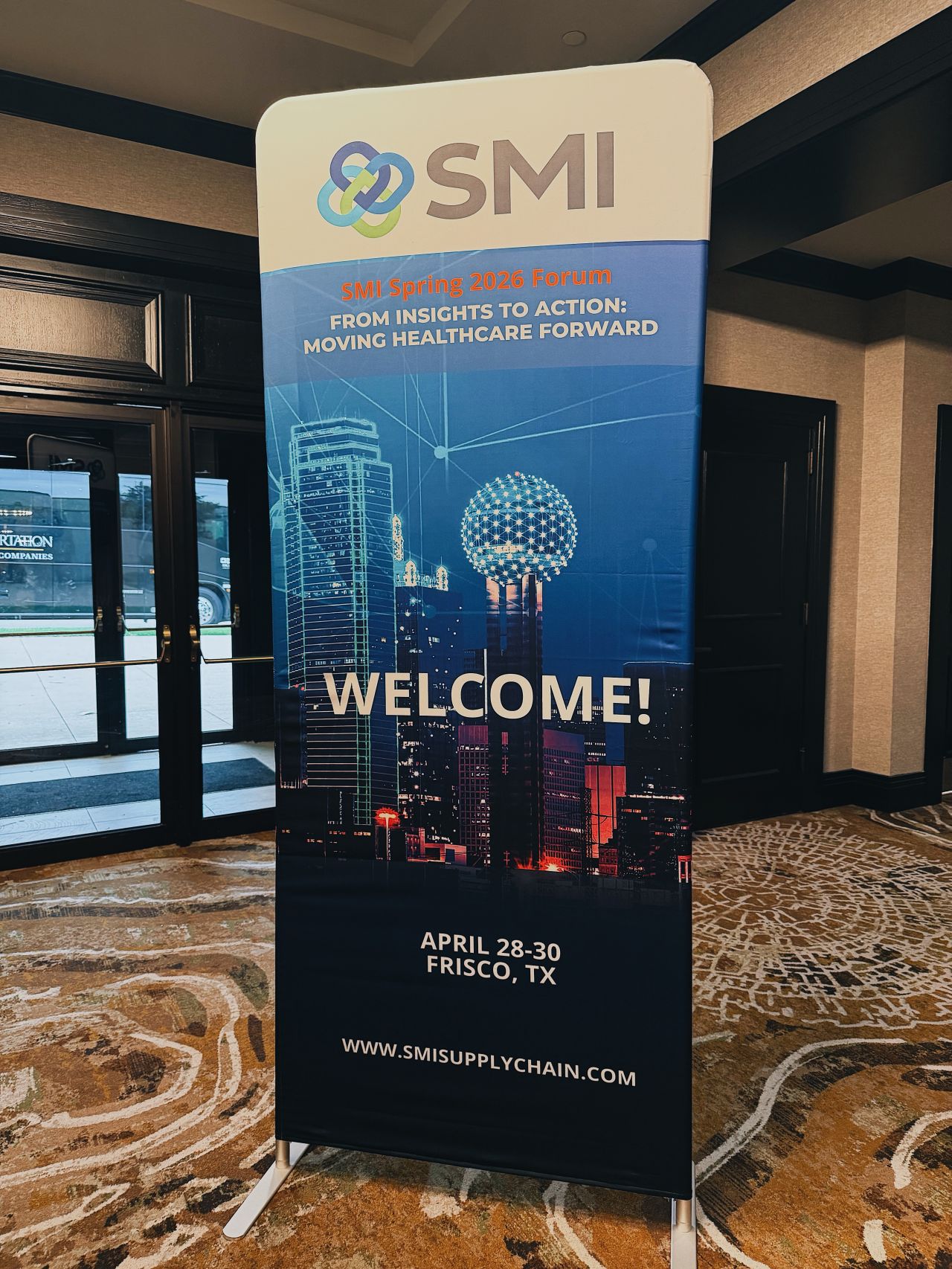
The SMI Spring 2026 Forum in Frisco, Texas brought together a diverse cross-section of healthcare leaders, all focused on one central question: how can supply chain evolve to better support the future of healthcare? Across conversations, workshops, and collaborative sessions, one thing became clear—supply chain is no longer operating in the background. It is actively shaping strategy, influencing outcomes, and redefining how healthcare organizations operate.
Below are my key takeaways from this year’s forum and what they signal for the road ahead.
Supply Chain Is a Strategic Driver—Not Just Operational
One of the most consistent themes throughout the forum was the elevated role of supply chain within healthcare organizations. What was once seen primarily as a transactional or operational function is now firmly positioned as a strategic driver. Supply chain leaders are increasingly influencing financial performance, supporting clinical outcomes, and strengthening organizational resilience.
This shift is closely tied to the move toward value-based decision-making. Health systems are no longer focused solely on cost containment—they are evaluating how every supply chain decision impacts quality, outcomes, and long-term sustainability. As a result, supply chain leaders are gaining a stronger voice at the executive level, helping shape enterprise-wide strategy in a meaningful way.
Collaboration Between Clinical and Supply Chain Teams Is Accelerating
Another standout theme was the growing alignment between clinical stakeholders and supply chain leaders. Organizations that are seeing success are bringing these groups together earlier in the decision-making process, ensuring that both clinical and financial perspectives are considered from the start.
As a member of SMI’s Clinical Integration Council, I had the opportunity to see this collaboration in action. The involvement of physicians—many of whom hold leadership roles in supply chain and value analysis—highlighted just how integrated these functions are becoming. What stood out most was the shared commitment to consensus-building. These leaders are not working in silos; they are actively partnering to drive decisions that balance patient safety, clinician preference, and cost efficiency.
This level of collaboration is not always easy, but it is essential. When clinical and supply chain teams are aligned, organizations are better positioned to standardize products, reduce variation, and ultimately deliver more consistent patient care.
Data-Driven Decision-Making Is Non-Negotiable
If there was one universal agreement across attendees, it was this: data is critical—but only if it’s actionable. Health systems are prioritizing analytics that provide clear, trusted insights into utilization, standardization opportunities, and total cost of ownership.
There is a growing demand not just for more data, but for better data—data that is timely, accurate, and easy to interpret. Leaders want to make confident decisions quickly, and that requires moving beyond static reports to dynamic, insight-driven tools.
Artificial intelligence was a major topic of discussion in this space. While there is significant interest and curiosity around AI’s potential, there is also a level of caution. No single solution has fully earned trust yet, but many organizations are actively exploring and piloting AI-driven capabilities to enhance decision-making. The focus is less on hype and more on practical application—how these tools can realistically improve speed, accuracy, and outcomes.
Risk, Resilience, and Preparedness Took Center Stage
In today’s environment, risk is no longer an abstract concept—it is a daily reality. From product shortages and supply disruptions to cybersecurity threats and system vulnerabilities, healthcare organizations are facing an increasingly complex risk landscape.
At the forum, there was a clear sense of urgency around shifting from reactive responses to proactive resilience. Leaders are looking for ways to anticipate challenges, mitigate risks earlier, and build systems that can withstand disruption.
This was a central focus of the Staritas and ECRI co-presentation, “From Risk to Resilience: Supply Chain Solutions to 2026’s Top Patient Safety & Health Technology Hazards.” The discussion highlighted how supply chain plays a critical role in identifying and addressing risks before they impact patient care. It also underscored the importance of collaboration—bringing together providers, vendors, and industry experts to develop more comprehensive solutions.
What stood out most was the level of engagement. Attendees were not just listening—they were actively contributing, sharing experiences, and exploring new approaches together. That kind of dialogue is exactly what’s needed to move the industry forward.
Innovation Must Be Practical and Scalable
Innovation continues to be a major focus across healthcare, but the conversation is evolving. There is still excitement around emerging technologies like AI, predictive analytics, and automation—but there is also a stronger emphasis on practicality.
Organizations are asking important questions: Can this solution scale across a complex health system? Will it integrate with existing workflows? How quickly can it deliver measurable impact?
There was also an interesting dialogue around the role of AI in the clinical workforce. Some discussions explored the possibility of AI augmenting—or even replacing—certain roles, such as physicians or nurses. Opinions were divided, with many expressing skepticism about the long-term feasibility of full replacement. What was more widely accepted, however, was AI’s potential to support clinicians, reduce administrative burden, and enhance decision-making.
Ultimately, innovation will only succeed if it delivers real-world value. The focus is shifting from what is possible to what is practical—and that is a positive step forward.
Partnerships Matter More Than Ever
Perhaps the most encouraging takeaway from the forum was the emphasis on partnership. Across sessions and conversations, there was a clear recognition that no single organization can solve these challenges alone.
Healthcare is a complex ecosystem, and progress requires collaboration across providers, suppliers, associations, and solution partners. Organizations are increasingly seeking partners who bring more than just technology—they want strategic insight, transparency, and a shared commitment to creating value.
What made this forum particularly impactful was the openness of the discussions. Participants were candid about the challenges they are facing, the solutions they are testing, and the lessons they are learning along the way. That level of honesty creates an environment where real progress can happen.
For me, this was one of the most valuable aspects of the event. It reinforced the idea that partnership is not just about alignment—it’s about trust, communication, and a willingness to work through complexity together.
Looking Ahead
The SMI Spring 2026 Forum made one thing clear: supply chain is at the center of healthcare transformation. It is driving strategy, enabling collaboration, and helping organizations navigate an increasingly complex landscape.
As the industry continues to evolve, the organizations that succeed will be those that embrace this shift—investing in data, fostering collaboration, prioritizing resilience, and building strong partnerships.
At Staritas, these themes are deeply aligned with how we approach our work. We believe in empowering healthcare organizations with the insights they need to make confident, data-driven decisions. We believe in collaboration across the ecosystem. And we believe that the future of healthcare depends on turning insight into action.
This forum was a powerful reminder that the path forward is not about any one solution—it’s about how we come together to solve challenges, share knowledge, and drive meaningful change.
Written by Alysha Melnyk, MPH, LSSGB, Manager, Healthcare Industry Relations, Staritas